SubnauticaDB
The Subnautica 2 Fan Database
Resources, crafting recipes, creature guides, keycodes, and survival tips. Everything you need to go deeper.
Browse
What is Subnautica?
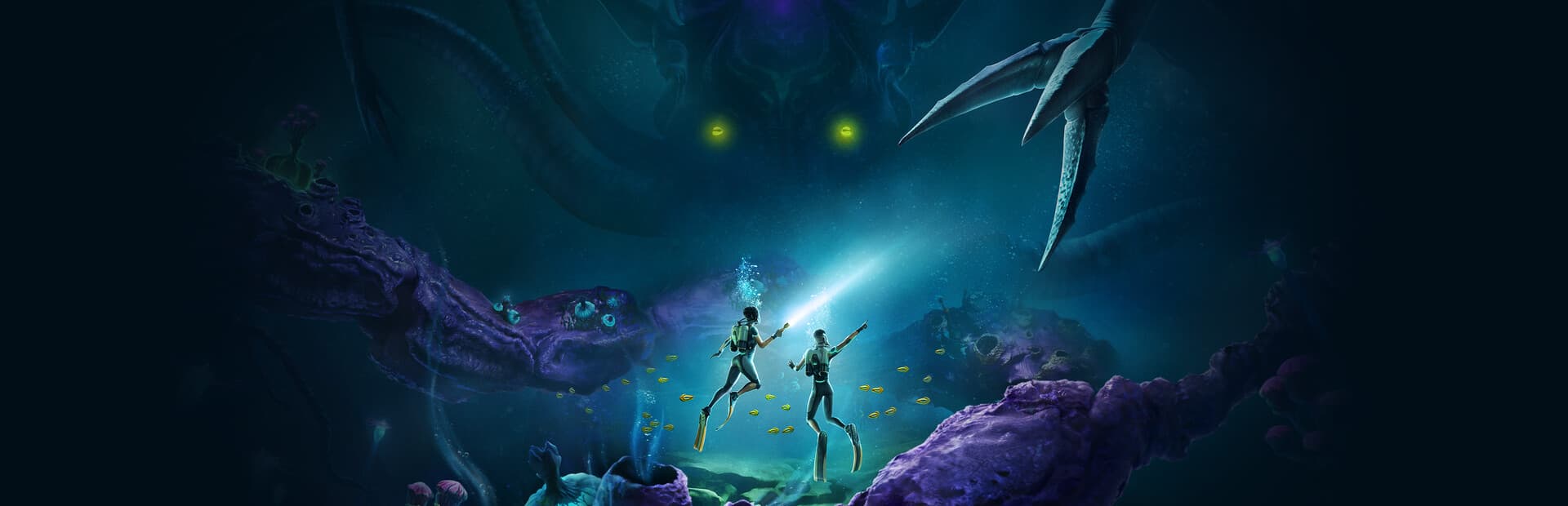
Subnautica is an open-world underwater survival game developed by Unknown Worlds Entertainment. The original game released in 2018 and became a cult classic — one of the few survival games that replaced aggression and combat with exploration, curiosity, and genuine dread of the deep. You wake up on an alien ocean planet with nothing but a broken lifepod, and you have to figure out everything from there.
The core loop — dive shallow, gather resources, craft tools, build a base, dive deeper, repeat — sounds simple but layers into something surprisingly compelling. The world is enormous, handcrafted, and full of creatures that feel genuinely alien. There are no quest markers. You find your own way. The series sold over 18.5 million copies across the original and its 2021 sequel Subnautica: Below Zero.
The thing players keep coming back to is the atmosphere. Every descent into darker water feels like stepping somewhere you weren't meant to go — and that tension never really leaves.
What is Subnautica 2?
Subnautica 2 is the official numbered sequel — a full continuation of the series built from the ground up in Unreal Engine 5. It launched into Early Access on May 14, 2026, priced at $29.99 on PC (Steam, Epic Games Store, Windows Store) and Xbox Series X|S. Within 12 hours of launch it had sold over 2 million copies, making it one of the fastest-selling Early Access titles in Steam history.
You play as a spaceship crash survivor who wakes up in the ocean of a new, uncharted alien planet. An AI system called NOA keeps you from dying permanently — reprinting your body each time the deep claims you — but survival still demands constant attention. Food, water, oxygen, depth pressure, and the creatures that treat you as prey are all working against you from the first minute.
The biggest addition over the original is 4-player co-op. You can explore, build bases, and face leviathans together with friends — or go completely solo if you prefer. Neither mode feels like an afterthought. The ocean is large enough that a group of four can play for hours without stepping on each other, and the base-building system has been substantially rebuilt to accommodate collaborative construction.
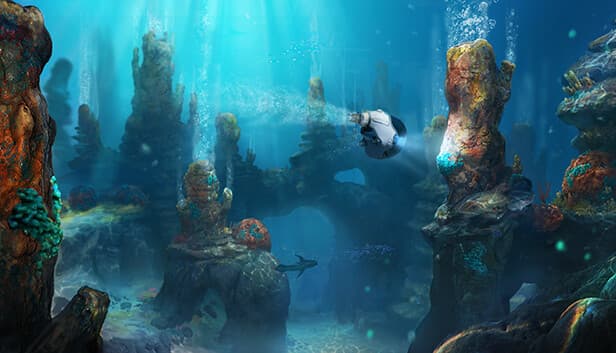
Visually, the UE5 upgrade is immediately noticeable. Bioluminescent creatures cast real light across rock surfaces. Water caustics ripple across the seabed. The darkness at depth is genuinely dark — not the dark-grey murk of the original, but pitch black broken only by creature glow and your own carried light sources.
How to Play Subnautica 2
The game doesn't hold your hand. Here's the loop that drives everything.
Start near your lifepod. Collect titanium, quartz, copper, and plant samples from the seafloor. Scan every fragment you find — blueprints unlock automatically once you have enough scans.
Your Scanner and Survival Multitool are the two tools you always have. Scan debris, creatures, and plants. Resources respawn over time, so don't hoard — use what you have.
The Fabricator turns raw materials into tools, food, and equipment. Once you have the Habitat Builder, set up a small base with storage and a second Fabricator. This is your anchor point.
Depth modules for your suit and vehicles are gated behind specific materials. Craft High Capacity O2 tanks, then Depth Module Mk.1 at the Modification Station. Each upgrade opens a new depth band.
Each biome deeper down introduces new creatures, new resources, and new story fragments. The loop keeps escalating. Some materials — like Kyanite and Conduit Crystals — only exist far below where you started.
Why Players Love It
The atmosphere is unmatched
No other survival game makes you feel genuinely small the way Subnautica does. The ocean is vast, the darkness below is real, and every creature you encounter was designed to feel like it evolved there — not like a game asset.
Discovery-driven progression
There are no quest markers or objective arrows. You find things by exploring. A blueprint fragment on a wreck, a data tablet in an abandoned base, a creature dropping something you've never seen — the game trusts you to be curious.
Base building that actually matters
Your base isn't just decoration. It's your oxygen refill station, your crafting hub, your storage, and your safe house. In Subnautica 2 the building system is rebuilt from scratch and supports far more complex layouts than the original.
Co-op changes everything
Playing with friends shifts the dynamic entirely. One person scouts in the Seamoth while another builds back at base. Four people exploring the Crystal Caves together while one panics about oxygen is a genuinely different kind of fun.
The creatures are actually terrifying
Leviathan-class predators that grab your submarine. Territorial ambush hunters in the deep caves. Harmless jellyfish-like creatures whose contact tentacles still deal damage. The ecosystem feels designed, not procedural.
The crafting loop is satisfying
Every material has a purpose. Chasing down a Necrolei Cyst to make Strong Acid to process Conduit Crystals to build a Sonic Resonator to open a Tadpole Pen — that chain of intent is exactly what makes the crafting feel rewarding.
Subnautica vs Subnautica 2
If you played the original and are wondering whether Subnautica 2 is worth it — here's the direct comparison.
| Feature | Subnautica (2018) | Subnautica 2 (2026) |
|---|---|---|
| Players | Solo only | Solo + 4-player co-op |
| Engine | Unity | Unreal Engine 5 |
| Planet | Planet 4546B | New alien ocean world |
| Base building | Standard | Fully rebuilt system |
| Ocean currents | Static | Dynamic — drags you into the deep |
| Platforms | PC, PS4/5, Xbox, Switch | PC, Xbox Series X|S |
| Story | Complete | In development (Early Access) |
Both games are worth playing. The original is a complete, polished experience. Subnautica 2 is newer, bigger, and still growing through Early Access — but already substantial.
Popular Resources
View all →Silver Ore
uncommonA lustrous metallic ore found in rocky outcroppings. Essential for crafting advanced electronics and wiring kits.
Lead
commonA dense, soft metal used in radiation shielding and hull plating. Found in sandstone outcroppings.
Gold
uncommonA rare, precious ore with high conductivity. Critical for advanced electronics.
Salt Deposit
commonWhite crystalline deposits used in water purification and basic food crafting.
Quartz
commonTransparent crystalline silicate used to craft glass and optical components.
Sulfur
uncommonA yellow crystalline mineral found near hydrothermal activity. Used in propulsion and explosives.
Featured Guides
View all →Getting Started: First 30 Minutes
Everything you need to do immediately after your lifepod hits the water.
Tadpole Pens: Codes & Keycodes Guide
How to access the Tadpole Pens, find keycodes, and unlock the upgrades inside.
How to Find Silver Ore
Where to look for silver, which biomes have the most, and what to craft with it.
Frequently Asked Questions
The questions showing up most in search right now.
QIs Subnautica 2 a direct sequel?
Yes. Unknown Worlds Entertainment built it as the true numbered sequel to the 2018 original. It takes place on an entirely new alien ocean planet with a fresh story, so you don't need prior experience — but series veterans will feel right at home.
QDoes Subnautica 2 have multiplayer?
Yes — for the first time in the series. Up to 4 players can explore, build, and survive together in co-op. The entire game is also fully soloable with no mechanics locked behind multiplayer.
QHow do I find silver in Subnautica 2?
Silver ore spawns as grey-white metallic veins on rock outcroppings. The most reliable early source is the cave systems inside the Grassy Plateaus biome at 50–200m depth. Use the Bioscanner to highlight nodes in dark areas.
QWhat are the Tadpole Pens codes?
The codes aren't universal — each one is hidden in the environment near its pen. Check rock formations around pen entrances, supply crates in the Sparse Reef, and data tablets inside already-opened pens. See our full Tadpole Pens guide for exact locations.
QHow do I get a Necrolei Cyst?
Harvest them from the Necrolei creature — a large territorial predator found at 250–600m in the Deep Grand Reef and Lost River. Approach from the side, not the front. The Bioscanner shows harvestable cyst nodes before you get within striking range.
QWhat is a Conduit Crystal used for?
Conduit Crystals are the main material for crafting the Sonic Resonator and Feedback Resonator. Both tools are needed to open Tadpole Pens and progress through alien facility puzzles. Find them in the Crystal Caves biome below 300m.
QIs the game finished?
Not yet. Subnautica 2 launched into Early Access on May 14, 2026. The opening story chapter and all core systems are fully playable, but additional biomes and later story chapters are still in development. Full release is estimated around 2028.
QHow do I craft a Titanium Ingot?
At the Fabricator: combine 10× Titanium to get 1× Titanium Ingot. Titanium is everywhere — metal salvage, limestone outcroppings from the shallows onward. Ingots are required for vehicles and large base components, so stockpile early.